
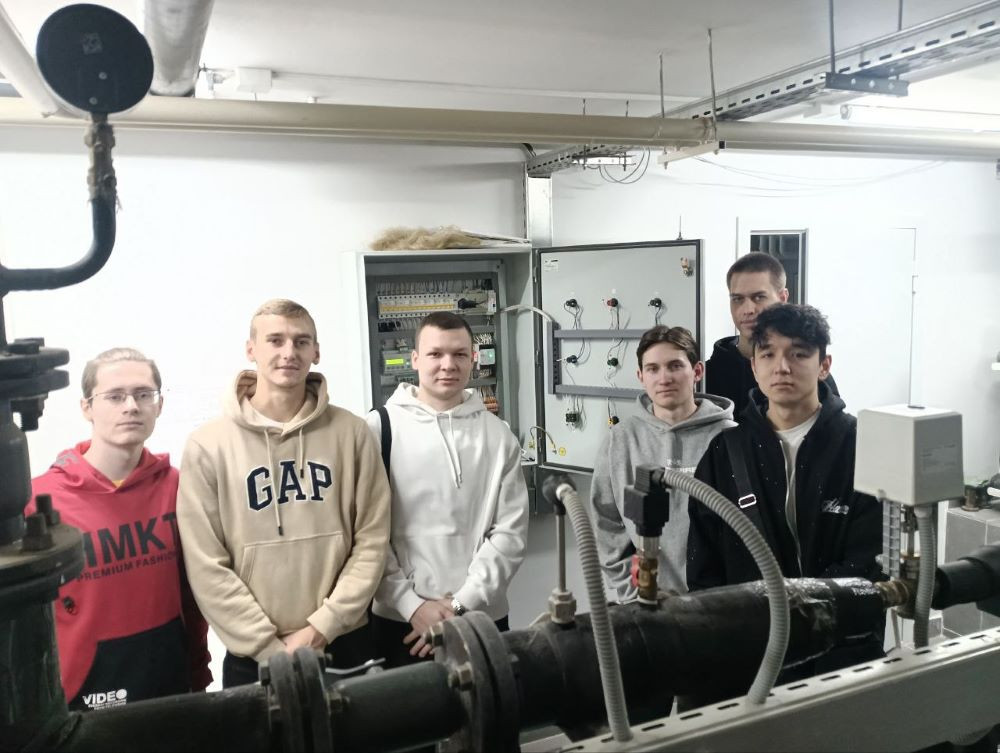
Scientists from Novosibirsk State Technical University (NETI), together with students, are developing an intelligent system for predicting accidents at heat supply facilities.
The development is carried out at the Faculty of Energy and the Faculty of Automation and Computer Engineering of NSTU-NETI in close cooperation with industrial partners. The project has been developing since 2020 with the support of the Priority 2030 program. Currently, there are 60 social facilities of the first category in the online monitoring system. The equipment on them collects data on operating modes with an interval of only 5 minutes, transmitting information over secure high-speed communication channels.
As part of the student's project activities, future power engineers need to assess the mutual influence of parameters on the actual consumption of thermal energy by the final facility. The task that students face is to determine the dynamics of heat energy consumption during periods of outdoor temperature changes, including an increase or decrease in consumption depending on the following parameters: outdoor air temperature and in the internal heat consumption system, as well as in the heating network; compliance or non—compliance of the actual temperature at the entrance to the facility with the approved temperature schedule of the heating network; the cost of the coolant.
"Smart heat supply relies on predictive analytics. The assessment of the mutual influence of parameters on the actual consumption of thermal energy is the foundation for the transition from reactive to proactive analysis. The practical value of such an analysis lies in the ability to adjust the operating modes of the heat consumption system to bring the actual parameters in line with the standards, which ultimately reduces financial losses from the irrational use of heat, while maintaining thermal comfort in the premises," said Olesya Borush, the scientific supervisor of the students, professor of the Department of Thermal Power Plants, Doctor of Technical Sciences.
To analyze and predict situations on heating networks, university scientists are introducing elements of artificial intelligence. Thus, as part of the pilot project, machine learning models were installed at three facilities, including the NSTU Engineering Lyceum. Algorithms trained on a multi-year data archive have already learned how to predict abnormal situations before they occur.
According to Alexander Dvortsevoy, associate professor of the Department of Thermal Power Plants at NSTU-NETI, Candidate of Technical Sciences, according to the test results, the system detects violations of the pressure of the return mains water 30 minutes before the actual output limit, and the forecast for the temperature of the direct and return mains water is even longer—term - from 2 to 6 hours before the onset of critical values.
When anomalies are detected, the system automatically sends alerts via the current monitoring interface and messenger (Max) according to a hierarchical scheme to responsible persons. This allows you to quickly respond and prevent accidents from developing.
The development team is currently working on debugging the mechanism of regular (streaming) training of mathematical models. In the near future, we plan to scale the successful solution and deploy smart monitoring at other social facilities in the city.